Thursday, 14 December 2023

"Sustainable Solutions for Bahrain's Future Climate Challenges"-sample blog

                 Introduction 

Bahrain, a small island nation in the Arabian Gulf, is facing numerous climate challenges due to its geographical location and heavy reliance on fossil fuels. As the effects of climate change become more apparent, it is crucial for Bahrain to adopt sustainable solutions to mitigate and adapt to these challenges. In this blog post, we will explore some sustainable solutions that Bahrain can implement to ensure a resilient and environmentally-friendly future.


Renewable Energy: One of the key steps towards sustainability is transitioning to renewable energy sources. Bahrain can harness its abundant solar energy potential by investing in solar power infrastructure. The country has already taken steps in this direction by establishing the Bahrain International Renewable Energy Conference and Exhibition (BIREC) to promote renewable energy technologies. By embracing solar power, Bahrain can reduce its dependence on fossil fuels, lower greenhouse gas emissions, and create a more sustainable and reliable energy system.


Waste Management: Proper waste management is essential to prevent pollution and promote sustainability. Bahrain can implement comprehensive recycling programs, waste separation at source, and composting facilities to reduce the amount of waste going to landfills. Additionally, promoting awareness campaigns on reducing single-use plastics and encouraging businesses to adopt sustainable packaging practices will contribute to a cleaner and healthier environment.


Green Building Practices: Bahrain's rapid urbanization has led to increased energy consumption and environmental impacts. Embracing green building practices can help mitigate these issues. By incorporating energy-efficient designs, using sustainable materials, and adopting renewable energy systems in construction, buildings can minimize energy consumption and carbon emissions. Bahrain can incentivize developers and architects to adopt green building certifications, such as LEED (Leadership in Energy and Environmental Design), to promote sustainable construction practices.


Water Conservation: Water scarcity is a significant concern in Bahrain, exacerbated by the country's arid climate and limited freshwater resources. Implementing water conservation measures is crucial for sustainable development. Bahrain can invest in desalination technologies, rainwater harvesting systems, and efficient irrigation techniques to reduce water wastage. Additionally, raising awareness among citizens about the importance of water conservation and promoting responsible water usage can help create a culture of sustainability.


Conclusion

Bahrain's future lies in its ability to embrace sustainable solutions to combat climate challenges. By investing in renewable energy, water conservation, sustainable transportation, waste management, and green building practices, Bahrain can pave the way for a more sustainable and resilient future. It is essential for the government, businesses, and citizens to work together towards these goals, ensuring a better 


References 

https://sdgs.gov.bh/Goal/?ID=WQ9ww4x80NvQbz4BbCswfQ==&authuser=0#:~:text=Bahrain%20has%20embarked%20on%20a,Prince%20and%20Prime%20Minister%2C%20during

https://www.sce.gov.bh/en/ClimateActioninBahrain?cms=iQRpheuphYtJ6pyXUGiNqvAikN8jAcW4&authuser=0






Monday, 13 November 2023

IMPACT OF SMOKING ON SOCIETY


                      IMPACT OF SMOKING ON SOCIETY 

Group 1 and 3 


Group 2 and 4 


Sunday, 12 November 2023

REASONS FOR DEATH AROUND THE WORLD


GLOBAL STATISTICS OF DEATHS DUE TO VARIOUS REASONS 


REASONS OF DEATHS

NUMBER OF DEATHS (%)


ACCIDENTS


35%


ALCOHOL


20%


DRUGS


14%


SMOKING


85%


AVERAGE SMOKERS AROUND THE WORLD


GLOBAL STATISTICS OF AVERAGE SMOKERS  


COUNTRY

PERCENTAGE OF SMOKERS


NAURU

52.1


RUSSIA

26.8

AMERICA


11.5

AFRICA


10.3

SWEDEN


6

Sunday, 22 January 2023

Rate of a reaction

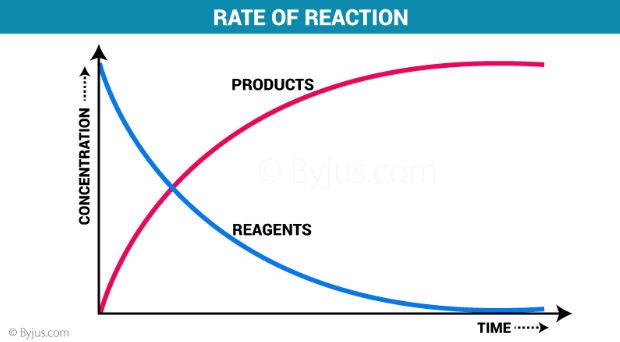
The rate of reaction refers to the speed at which the products are formed from the reactants in a chemical reaction. It gives some insight into the time frame under which a reaction can be completed. For example, the reaction rate of the combustion of cellulose in fire is very high and the reaction is completed in less than a second.

What is Reaction Rate?

The rate of reaction or reaction rate is the speed at which reactants are converted into products. When we talk about chemical reactions, it is a given fact that rate at which they occur varies by a great deal. Some chemical reactions are nearly instantaneous, while others usually take some time to reach the final equilibrium.

This article aims to help students learn about and understand what exactly is the rate of reaction for a given chemical compound.

Rate of Reaction


 Factors affecting the rate of reaction


The various factions that can affect the rate of a chemical reaction are listed in this subsection.


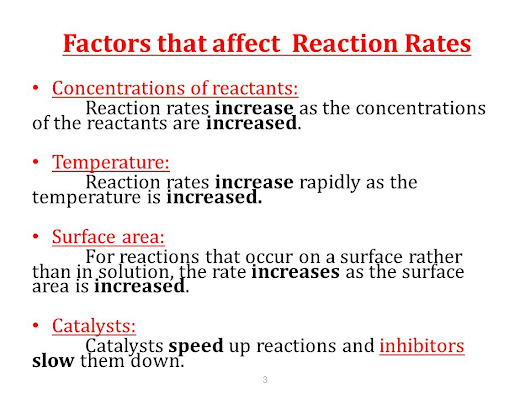
Effect of concentration on reaction rate

  • According to the collision theory, the rate of reaction increases with the increase in the concentration of the reactants.
  • As per the law of mass action, the chemical reaction rate is directly proportional to the concentration of reactants.
  • This implies that the chemical reaction rate increases with the increase in concentration and decreases with the decrease in the concentration of reactants.
  • Time plays a major role in changing the concentration of reactants and products. Therefore, even time is a vital factor affecting the reaction rate.

Recommended Videos


1,703

Pressure factor

  • Pressure increases the concentration of gases which in turn results in the increase of the rate of reaction. The reaction rate increases in the direction of less gaseous molecules and decreases in the reverse direction.
  • Thus, it can be understood that pressure and concentration are interlinked and that they both affect the rate of reaction.

How does temperature affect the reaction rate?

  • According to collision theory, a chemical reaction that takes place at a higher temperature generates more energy than a reaction at a lower temperature.
  • This is because colliding particles will have the required activation energy at high temperature and more successful collisions will take place.
  • There are some reactions that are independent of temperature. Reactions without an activation barrier are examples of chemical reactions that are independent of temperature.


Presence of Catalyst

  • A catalyst can be defined as a substance that increases the rate of the reaction without actually participating in the reaction. The definition itself describes its effect on chemical reactions.
  • The presence of a catalyst increases the speed of reaction in both forward and reverse reaction by providing an alternate pathway which has lower activation energy.

Surface Area of the Reactants

The surface area of reactants affects the rate of reaction. If the size of a particle is small, the surface area will be more and this increases the speed of heterogeneous chemical reactions.

More references

https://opentextbc.ca/introductorychemistry/chapter/factors-that-affect-the-rate-of-jjreactions/#:~:text=Reactant%20concentration%2C%20the%20physical%20state,factors%20that%20affect%20reaction%20rate.

https://byjus.com/chemistry/rate-of-reaction/


Sunday, 4 December 2022

                                 TRENDS  IN GROUP 2 ELEMENTS

The Group 2 alkaline earth metals include Beryllium, Magnesium, Calcium, Barium, Strontium and Radium and are soft, silver metals that are less metallic in character than the Group 1 Alkali Metals. Although many characteristics are common throughout the group, the heavier metals such as Ca, Sr, Ba, and Ra are almost as reactive as the Group 1 Alkali Metals. All the elements in Group 2 have two electrons in their valence shells, giving them an oxidation state of +2.


Trends in group 2 elements .

Group 2 elements are called alkaline earth metals. They are usually solid metals with high melting and boiling points.


Graph showing atomic size of elements in group 2


1. What is the trend in atomic size of atoms in group 2?

 2. Which is the smallest element  in group 2?

3. Radium is the last element in group 2? Predict the atomic size of radium.


1. What trend did you observe in the boiling and melting point of elements in group 2

2.Which element has the highest boiling point?

3. From the graphs, can you predict which element is the hardest in group 2?


STRUCTURE OF CARBON ATOM

  STRUCTURE OF CARBON ATOM